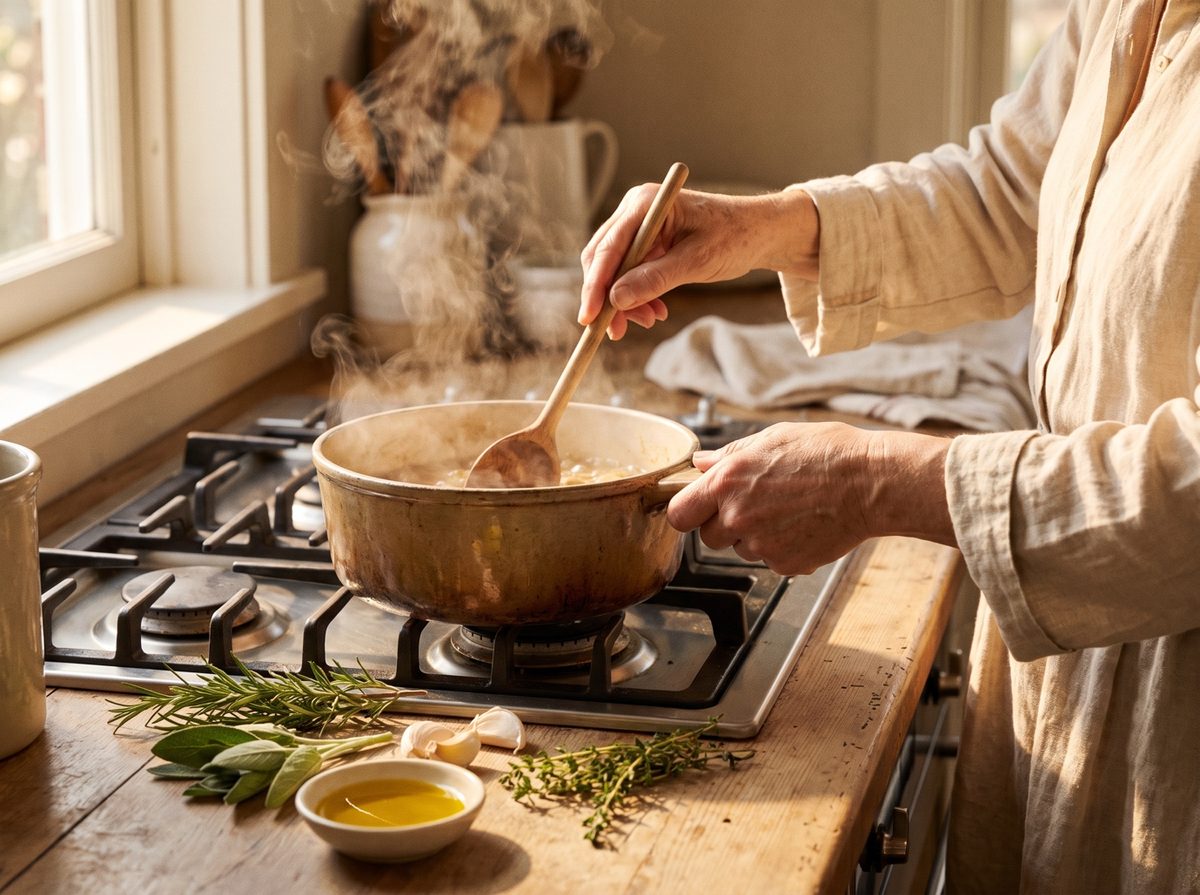
There is a particular kind of tiredness that comes not from doing too much, but from doing everything at speed. We eat standing up. We cook with one eye on a screen. We treat the kitchen as a pitstop rather than a sanctuary.
But something shifts when you choose, even once a week, to cook slowly. To wash the herbs before you need them. To let the onions soften properly. To taste as you go, not just at the end.
Wellbeing research tells us that engaging in purposeful, repetitive, sensory tasks — exactly what cooking asks of us — activates the parasympathetic nervous system. The same state we chase through meditation, through breathwork, through expensive retreats.
The kitchen has always known this. We just forgot to listen.
A Practice, Not A Performance
The slow meal isn't about making something Instagram-worthy. It isn't about a particular cuisine or a complicated technique. It is simply about being in the room. Noticing the smell of garlic hitting warm oil. The way lemongrass releases its scent when you press it. The particular sound of a properly heated wok.
These aren't incidental. They are the whole point.
At Luma House, we talk about cooking as a wellbeing practice — not because we're being poetic, but because the evidence supports it. And because Marni has lived it. Some of her hardest days have been turned, gently, by an hour in the kitchen with good ingredients and no particular rush.
Try it this week. One slow meal. No shortcuts, no screens. Just you, and what's in front of you.
— Marni, Luma House